
Best AI Product Marketing Image Generator in 2026: Turn 1 Photo into 50+ High-Converting Ad Creatives
 By Vivi/1 min read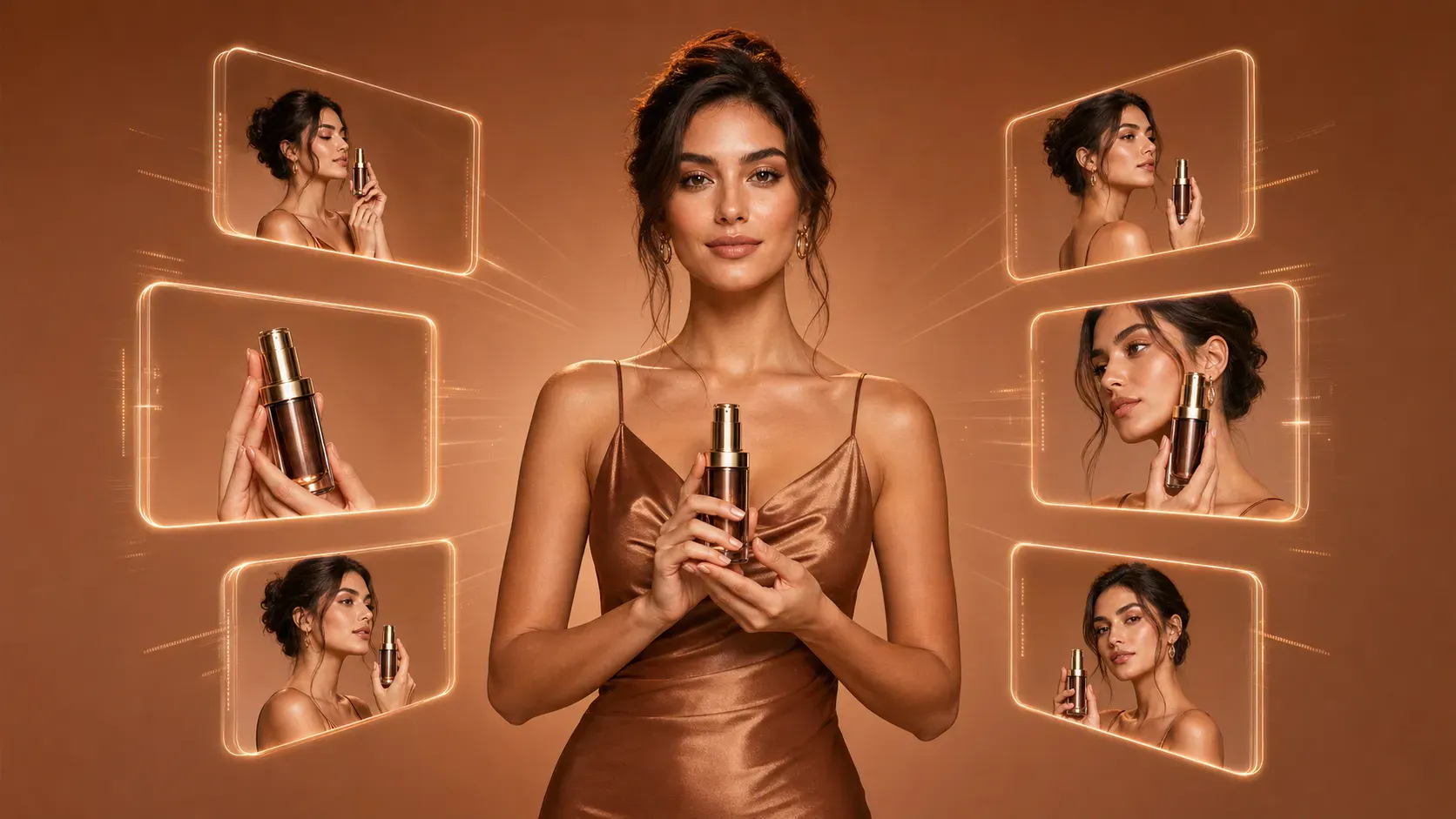
Looking for the best AI Product Marketing Image Generator? Learn how to create product advertising images, lifestyle product photography, ecommerce marketing creatives, promotional banners, and seasonal campaign visuals from a single product photo using AI.
Best AI Product Marketing Image Generator in 2026: Turn 1 Photo into 50+ High-Converting Ad Creatives
Launching a new product is exciting. Keeping its marketing fresh is much harder.
The same product may appear on your Shopify homepage, Amazon listing, Meta Ads campaign, TikTok Shop storefront, Instagram feed, Google Shopping results, and email newsletter—all within a few weeks. Each channel has different image sizes, different audiences, and precise creative requirements for dynamic creative optimization (DCO).
As a result, one product photo is rarely enough.
Marketing teams constantly need new advertising creatives, seasonal banners, lifestyle photography, promotional graphics, and campaign visuals. Every new sale, holiday, or product launch often means starting another design project. For many ecommerce businesses, creating marketing assets has become more time-consuming than creating the product itself.
That's why AI is quickly becoming part of the modern ecommerce workflow.
Instead of rebuilding every campaign manually, businesses can now leverage an AI Product Marketing Image Generator to transform a single product photo into hundreds of campaign assets. With the right prompt, AI can create advertising visuals, lifestyle scenes, promotional graphics, and branded marketing creatives in minutes, allowing teams to launch campaigns faster while significantly reducing production costs.
In this guide, you'll learn how these tools work, what types of marketing assets they produce, why more ecommerce brands are adopting them, and how to choose the right solution for workflow automation.
Transform a single product model photo into a full suite of multi-angle commercial ad creatives with AI.
What Is an AI Product Marketing Image Generator?
An AI Product Marketing Image Generator is an AI-powered creative tool that transforms an existing product photo into commercial, campaign-ready visuals.
Instead of manually editing every campaign in Photoshop or arranging a new photoshoot, you simply upload your product image, describe the campaign you want to create, and AI generates professional marketing assets automatically.
These assets can include:
• Product advertising images
• Lifestyle product photography
• Ecommerce hero banners
• Promotional campaign graphics
• Holiday marketing visuals
• Social media creatives
• Product launch images
• Display advertising graphics
For ecommerce brands, generating high-converting product advertising images with AI dramatically shortens the creative process while making it effortless to produce multiple concepts for A/B testing across Amazon, Shopify, Meta Ads, TikTok Shop, and Google Shopping.
Why Do Ecommerce Brands Need So Many Marketing Images?
Customer journeys have changed dramatically. Today's shoppers rarely purchase a product after seeing a single image. Instead, they discover products across multiple platforms before making a buying decision.
A typical journey might look like this:
1. Discover the product on Instagram
2. Click a Meta Ads campaign
3. Browse the product on Shopify
4. Compare options on Amazon
5. Search again through Google Shopping
6. Return after receiving a promotional email
Every interaction requires a different type of visual. Instead of using one static product image everywhere, brands now create:
• High-converting product advertising images
• Homepage hero banners
• Lifestyle product photography
• Promotional graphics
• Mobile-first creatives
• Seasonal campaign visuals
• Collection banners
• Email marketing headers
A single product SKU can easily require 30 to 50 unique marketing images every year. Multiply that across dozens—or even hundreds—of products, and creative production quickly becomes one of the biggest operational bottlenecks for any growing ecommerce business.
This growing demand is one of the main reasons brands are investing in automated AI ecommerce marketing creative tools rather than relying entirely on traditional design workflows.
Why Doesn't the Traditional Workflow Scale?
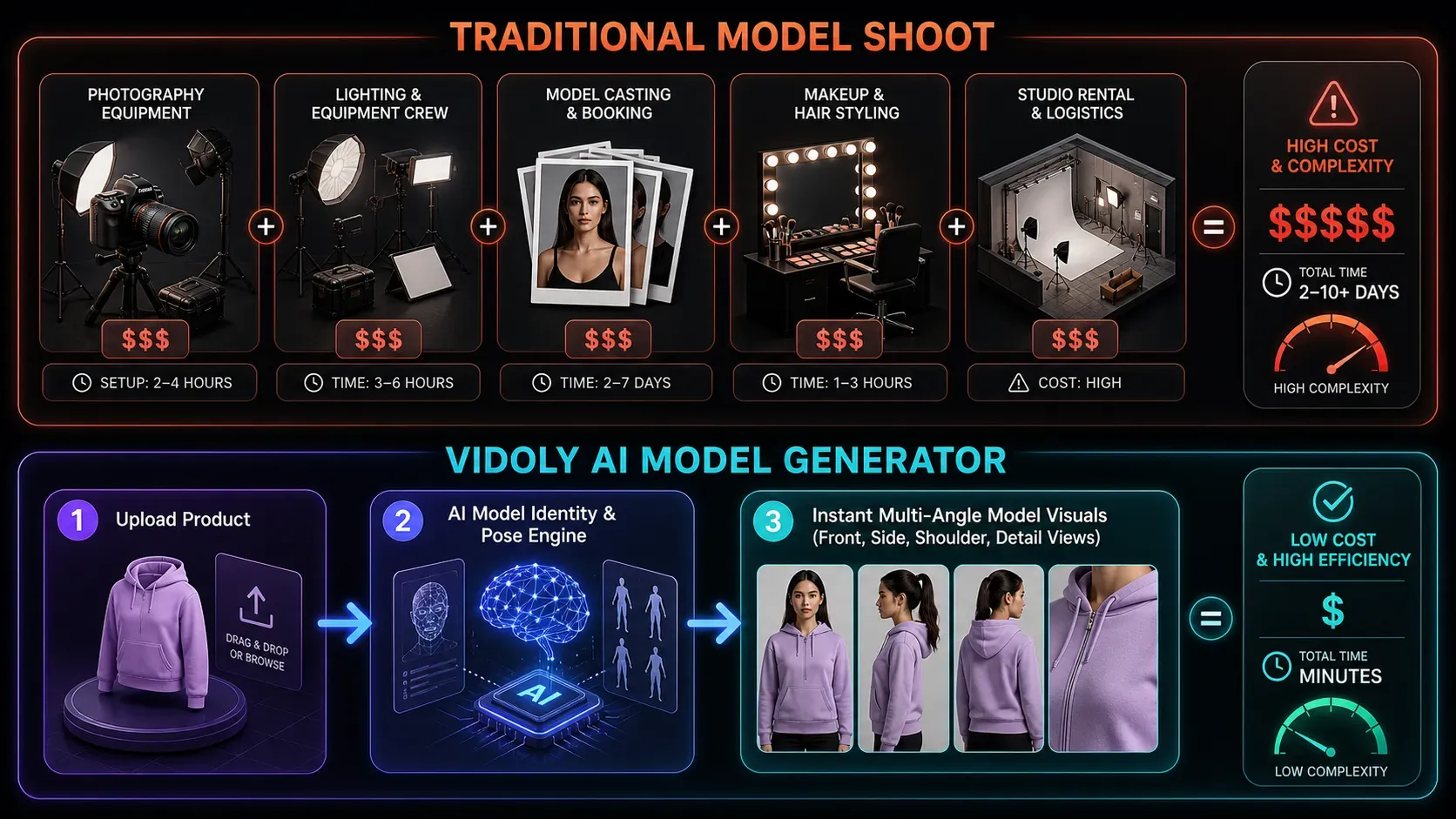
Traditional product photoshoots take weeks—AI model generation cuts turnaround to under two minutes.
Traditional product marketing was never designed for today's pace of ecommerce. Every campaign usually follows the same tedious process:
Photograph Product ➔ Remove Background ➔ Design Scene ➔ Source Props ➔ Adjust Lighting ➔ Retouch ➔ Export Sizes ➔ Repeat
Now imagine repeating that workflow for:
• Spring Sale
• Mother's Day
• Summer Collection
• Back-to-School
• Halloween
• Black Friday
• Christmas
• Valentine's Day
The product never changes—only the campaign changes. Yet the creative process starts almost from scratch every time.
The core challenge isn't creating one beautiful marketing image; it's creating hundreds of campaign variations quickly enough to support continuous advertising across multiple channels without creative fatigue.
Can AI Replace Traditional Product Marketing Photography?
No, AI does not replace initial product photography—it scales it.
Professional product photography is still the best way to capture accurate base details, textures, colors, and precise packaging. However, once you already have a high-quality baseline photo, AI becomes a much faster solution for expanding that single shot into contextual marketing campaigns.
Instead of photographing the same product ten different times, AI can place that exact SKU into ten completely different commercial scenarios. For example, the same skincare bottle can become:
• A luxury marble advertisement
• A spa-inspired lifestyle image
• A minimalist Scandinavian campaign
• A Mother's Day promotion
• A summer travel advertisement
• A premium holiday gift guide
This is where generating commercial product visuals with AI provides the greatest ROI. Rather than replacing your original photography, it extends it into dozens of campaign-ready marketing assets without requiring another expensive studio session.
AI Product Photography vs. AI Product Marketing Images
Although these terms are often used interchangeably, they serve different operational purposes.
| Feature / Metric | AI Product Photography | AI Product Marketing Images |
|---|---|---|
| Primary Focus | Accurately presenting the physical product | Selling the product through lifestyle storytelling |
| Visual Style | Studio-style catalog presentation | Campaign-focused commercial creative visuals |
| Composition | Product-first clean lighting | Customer-first emotional composition |
| Best Used For | Amazon listings, catalog pages, transparent cutouts | Paid ads, social media campaigns, hero banners |
| Core Goal | Highlights product specs, details, and dimensions | Highlights lifestyle, emotion, and brand identity |
Imagine you're selling a smartwatch. A product photography image might simply show the watch on a clean studio background. A promotional product marketing image tells a story: it shows someone finishing a morning run at sunrise, checking workout statistics in a modern gym, or wearing it during a business meeting.
That context helps customers imagine themselves using the product—and that emotional connection drives buying decisions.
What Types of Marketing Images Can AI Generate?
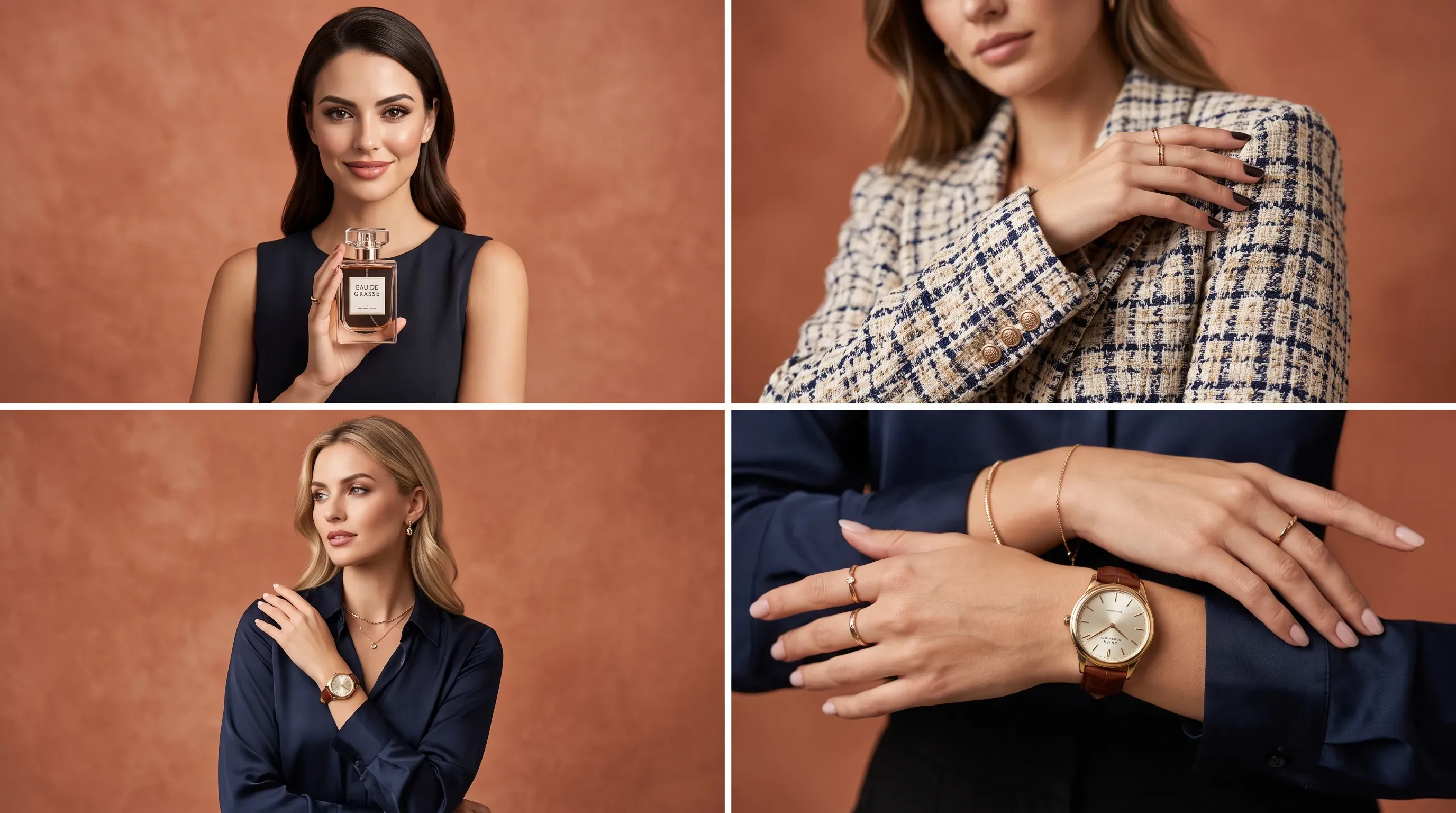
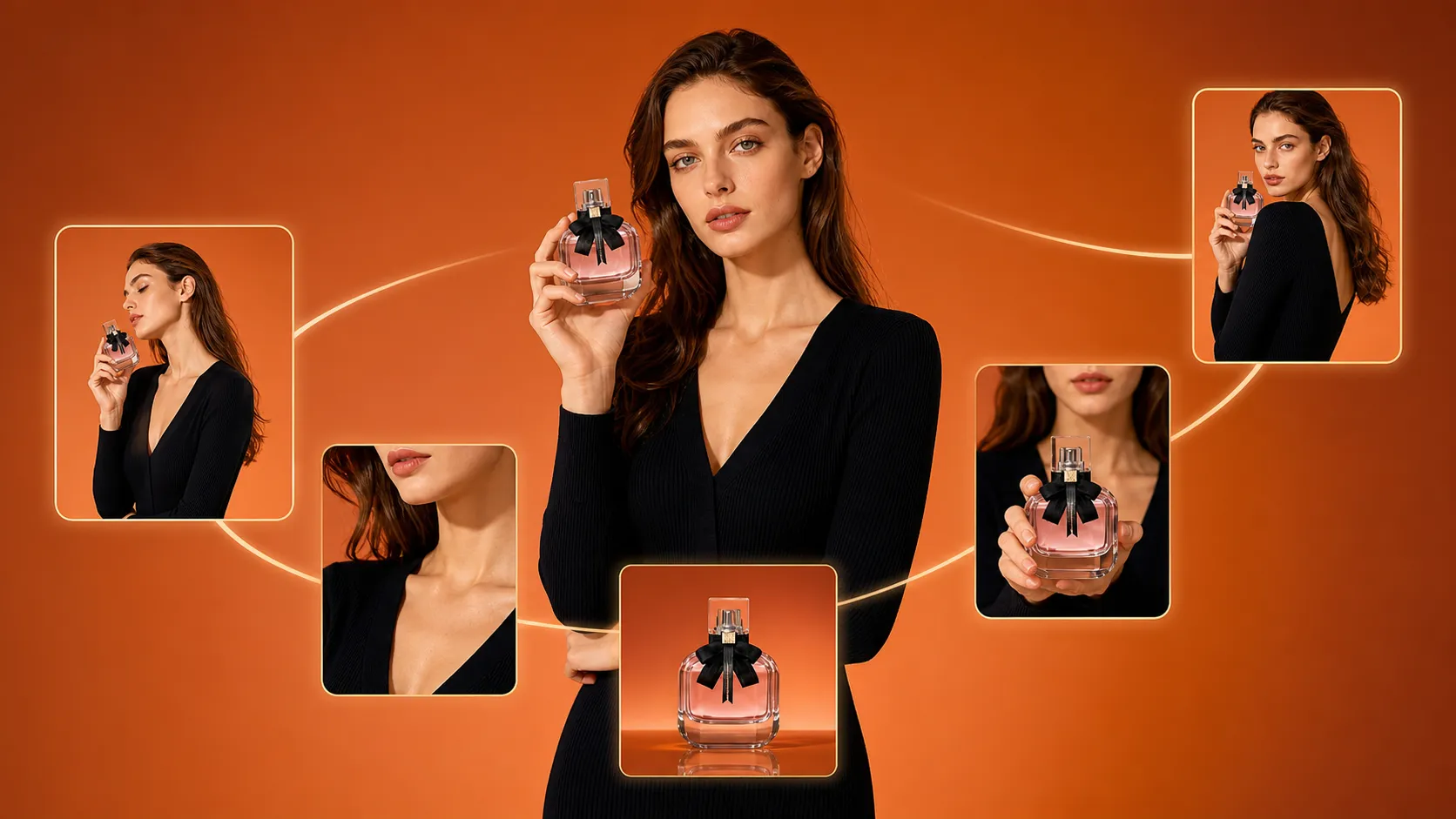
Generate versatile commercial angles including shoulder view, clothing detail, and close-up product interactions.
Modern AI supports almost every stage of an ecommerce marketing campaign.
1. Product Advertising Images
Paid advertising depends on creative testing. Instead of relying on one design, marketers can generate multiple product advertising images with different backgrounds, lighting styles, compositions, and campaign themes. These variations make A/B testing and Dynamic Creative Optimization (DCO) seamless across Meta Ads, Google Ads, TikTok Shop, and Pinterest.
2. Lifestyle Product Photography
Customers buy experiences, not just products. Using an AI lifestyle product photo creator allows you to naturally place products into realistic environments such as:
• Modern kitchens & dining spaces
• Cozy cafés & boutique shops
• Luxury spa bathrooms
• Executive home offices
• Sunlit outdoor mountain trails
• High-energy fitness studios
3. Ecommerce Hero Banners
An effective homepage banner requires balanced composition, premium lighting, visual hierarchy, and enough clear space for promotional copy. By generating AI ecommerce hero images, brands can instantly create campaign-ready banners for Shopify stores, seasonal sales, and landing pages without rebuilding layouts manually.
Expanding Your Campaign Production Strategy
Product marketing isn't limited to ads. As your business grows, every channel requires specialized creative assets.
Seasonal Campaign Creatives
Instead of sourcing seasonal props and setting up new studio lighting for every holiday, you can generate seasonal product marketing images by updating your campaign prompt. The same product stays consistent while the surrounding atmosphere transforms into a cozy Christmas gift scene, a vibrant spring picnic, or a crisp autumn promotion.
Social Media Marketing Creatives
Running the same creative for weeks leads to ad fatigue and declining ROAS. Marketers can easily churn out multiple AI social media product creatives tailored for specific platform aspect ratios:
• 1:1 Square for Instagram posts & feed ads
• 9:16 Vertical for TikTok Shop, Reels, & Stories
• 16:9 Landscape for website banners & YouTube display ads
• 2:3 Pins for Pinterest marketing
Product Launch Campaigns & Brand Storytelling
When launching a new SKU, AI helps generate a unified package of product launch marketing images—from teaser social graphics to email marketing headers. Furthermore, using AI brand marketing visuals helps convey aspirational lifestyle cues, linking your brand identity to broader themes like adventure, wellness, or luxury.
Why Marketing Teams Are Switching to AI
The biggest advantage of AI isn't replacing human creativity; it's eliminating repetitive production friction. Benchmark tests across high-growth ecommerce brands show that AI adoption drastically improves campaign efficiency:
• Faster Turnaround: Reduce campaign design turnaround from days to under 2 minutes.
• Cost Efficiency: Cut ad creative production costs by up to 75% compared to recurring photo shoots.
• Higher Conversion: Boost ad Click-Through Rates (CTR) through rapid multi-variant A/B testing.
Tool Comparison: Manual vs. General AI vs. Vidoly
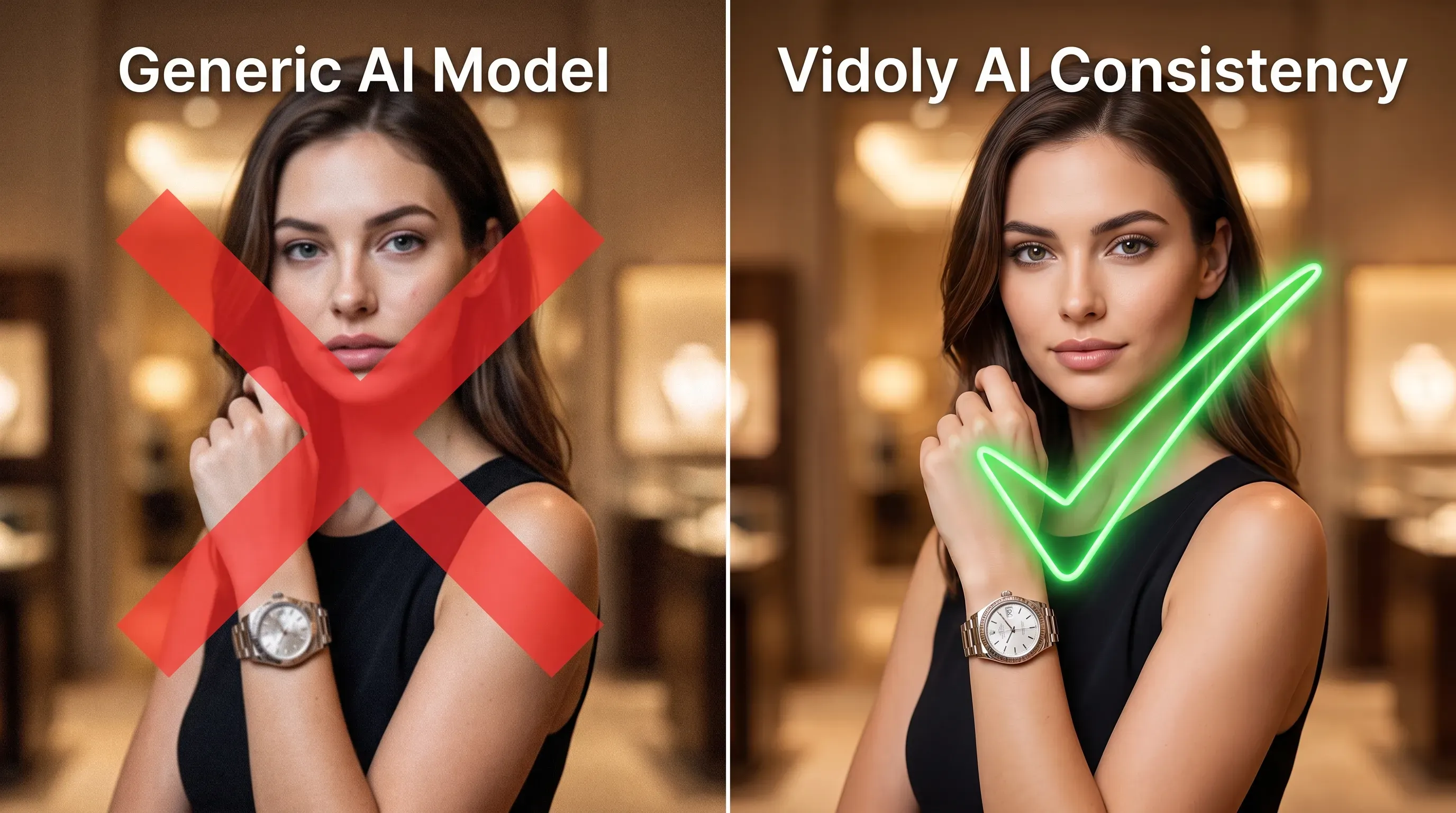
Maintain 100% brand accuracy with precise SKU preservation and consistent AI model features.
To understand why dedicated tools win in ecommerce, consider how different approaches compare:
| Feature / Capability | Vidoly Product Marketing Image Generator | General AI (e.g., Midjourney / DALL-E) | Traditional Photoshop / Manual Editing |
|---|---|---|---|
| Product Consistency (SKU Preservation) | 100% Exact Match (Preserves exact logos, packaging, & textures) | Low (Distorts products & alters brand logos) | Perfect (High manual detail) |
| Production Speed | Under 1 Minute | 5–10 Minutes (Iterative prompting) | Hours to Days |
| Ecommerce Workflows | Built-in (Preset aspect ratios & ad formats) | Manual post-processing required | Manual resizing & cropping |
| Commercial Scene Lighting | Commercial-Grade Presets | Requires complex artistic prompting | Requires advanced lighting setup |
| Scalability for Large Catalogs | Automated Batch Processing | Low (One-by-one generation) | Extremely Low |
How to Choose the Best AI Product Marketing Image Generator
Not every AI generator is built for commercial performance. When evaluating tools, ensure they offer:
1. Precise SKU Preservation: Your product packaging, logo, color accuracy, and dimensions must remain 100% recognizable across all background transformations.
2. Commercial Lighting Quality: Outputs should feature realistic shadows, natural reflections, and commercial depth-of-field suitable for paid advertising.
3. Prompt Flexibility: The engine should adapt to diverse commercial prompts (e.g., luxury minimalist, warm outdoor, modern studio) without losing product realism.
4. High-Resolution Multi-Format Exports: Assets must export cleanly in high-res PNG/JPG formats optimized for web, mobile, and print displays.
Why Choose Vidoly Product Marketing Image Generator?
The Vidoly Product Marketing Image Generator is built specifically for commercial ecommerce performance. Unlike general artistic generators that hallucinate product details, Vidoly focuses on preserving exact product SKUs while placing them into high-converting campaign contexts.
Whether you need to refresh Meta ad creatives, create Shopify collection banners, or launch a holiday sale, Vidoly turns a single photo into a complete marketing design suite in seconds.
Step-by-Step: Creating Marketing Images with Vidoly
Creating campaign visuals with Vidoly is fast and intuitive:
Step 1. Upload Your Baseline Product Photo
Start with a clear, well-lit photo of your product. If your image contains a cluttered background, you can quickly create a clean studio cutout using an AI Background Remover before generating campaign scenes.
Step 2. Describe Your Marketing Concept
Guide the AI with a prompt focusing on atmosphere, target audience, lighting, and mood:
"Premium skincare bottle on elegant white marble, soft morning sunlight, luxury cosmetic advertisement, editorial photography, minimalist aesthetic."
"Artisan coffee bag surrounded by roasted beans on a rustic wooden table, cozy warm café atmosphere, cinematic lighting."
Step 3. Generate Multiple Creative Concepts
Generate multiple variations simultaneously. Experiment with alternative lighting styles, seasonal accents, and camera angles to prepare assets for systematic A/B testing.
Step 4. Download and Launch Across Channels
Export your selected visuals in high resolution and deploy them across Shopify, Amazon, Meta Ads, TikTok Shop, Google Shopping, and email campaigns.
Best Practices & Prompt Engineering Tips
To achieve studio-quality results, follow these prompting guidelines:
Focus on Campaign Context: Don't just prompt "put product on a table". Instead, write: "Leather wallet resting on a dark walnut executive desk, warm afternoon sunlight, sophisticated corporate lifestyle, soft bokeh background."
Maintain Visual Consistency: Keep consistent lighting styles and color palettes across campaign assets to reinforce brand recognition.
Utilize Complementary Tools: When scaling into international markets with localized graphics, you can leverage an AI Image Translator to streamline promotional asset translation seamlessly across regions.
Frequently Asked Questions (FAQ)
What is the best AI Product Marketing Image Generator in 2026?
The best tool depends on commercial accuracy, but Vidoly is a top choice for ecommerce brands. Vidoly specializes in exact product SKU preservation, commercial lighting, and built-in ad format sizing specifically optimized for platforms like Shopify, Meta Ads, and Amazon.
Can AI replace product marketing photoshoots?
No, AI does not replace initial product photography—it scales it. Professional studio shoots capture the baseline physical product details, while AI takes that single photo and multiplies it into dozens of dynamic, seasonal, and contextual marketing visuals.
Are AI-generated marketing images compliant with Amazon and Shopify?
Yes, AI-generated campaign images are widely used across Shopify, Amazon, and Meta Ads. They are ideal for secondary gallery images, A+ Content, landing page banners, and ad creatives. Always ensure main listing images comply with specific marketplace background requirements (such as Amazon's pure white background rule for primary images).
How many marketing images should one product have?
A single product SKU typically requires 30 to 50 unique marketing visuals annually. This includes variations for social media ads, homepage hero banners, seasonal sales (Black Friday, Summer Sale), email headers, and ongoing multi-variant A/B tests.
What makes an effective AI product marketing prompt?
An effective prompt details the scene context, lighting, mood, lifestyle setting, and photography style. Rather than just naming objects, describe the atmosphere (e.g., "soft golden hour sunlight, minimalist luxury spa setting, editorial depth of field").
Conclusion
Ecommerce success in 2026 relies on publishing fresh, high-converting visual content across every platform where customers engage. Creating those assets through traditional photoshoots is costly, slow, and impossible to scale across large catalogs.
By utilizing an AI Product Marketing Image Generator, you can transform a single product photo into an unlimited engine of advertising creatives, lifestyle scenes, hero banners, and seasonal campaign assets in seconds.
Ready to scale your visual content without arranging another photoshoot? Try the Vidoly Product Marketing Image Generator today and build campaign-ready marketing assets instantly.
Related Articles
Free Photo to Sketch AI Generator: Convert Any Photo to a Pencil Sketch Online
AI Art Generator: Turn Photos into Oil Paintings with AI (Free Online Tool)