
Shopify Holiday Marketing 2026: How to Localize Campaigns for Global Markets
 By Vivi/1 min read

Learn how to localize your Shopify holiday campaigns for international markets in 2026, from multilingual content and product images to regional promotions and customer experiences.
How to Localize Your Shopify Holiday Campaigns for Global Markets: A Q4 2026 Guide
Your Q4 Campaign Shouldn't Look the Same in Every Market
Q4 is one of the most important periods for ecommerce brands. Black Friday, Cyber Monday, Christmas, and year-end promotions bring different shopping opportunities, from discount-driven purchases to holiday gifting.
For Shopify merchants selling internationally, however, running a successful holiday campaign involves more than translating a few promotional messages.
Imagine a fashion brand selling to customers in the United States, Germany, and France. Its team has prepared a Black Friday promotion, selected bestselling products, and scheduled its email and social media campaigns. But the same product priorities, promotional messages, and shopping recommendations are being used across all three markets without considering their differences.
The campaign may be technically ready, but is it relevant to each audience?
A global campaign needs a consistent brand identity, but its execution should account for different markets, languages, customer interests, and shopping occasions.
This is where Shopify holiday campaign localization becomes important. Instead of treating international customers as one audience, merchants can organize their Q4 campaigns around market-specific priorities while keeping their core brand message consistent.
In this guide, we'll explain how to plan international holiday campaigns, prioritize markets and products, organize localized content, and use Vidoly Image Translator for Shopify to prepare product images for different language audiences.
Quick Answer: How Do You Localize a Shopify Holiday Campaign?
To localize a Shopify holiday campaign, start by selecting your target markets, identifying the products and offers relevant to each audience, and preparing the appropriate campaign content for each market.
1. Select the countries and languages you want to target.
2. Define the campaign objective and offer for each market.
3. Prioritize products and categories based on local shopping interests.
4. Prepare market-appropriate campaign content and product visuals.
5. Localize text embedded in relevant Shopify product images.
6. Review promotional details, product information, and language versions.
7. Test the shopping experience in each target market.
The goal is not to create an entirely different campaign for every country. It is to maintain one consistent brand strategy while making the customer-facing experience relevant and understandable in each market.
1. Start With Your Target Markets, Not Just Your Campaign Design
One common mistake in international ecommerce marketing is starting with creative production before deciding who the campaign is intended to reach.
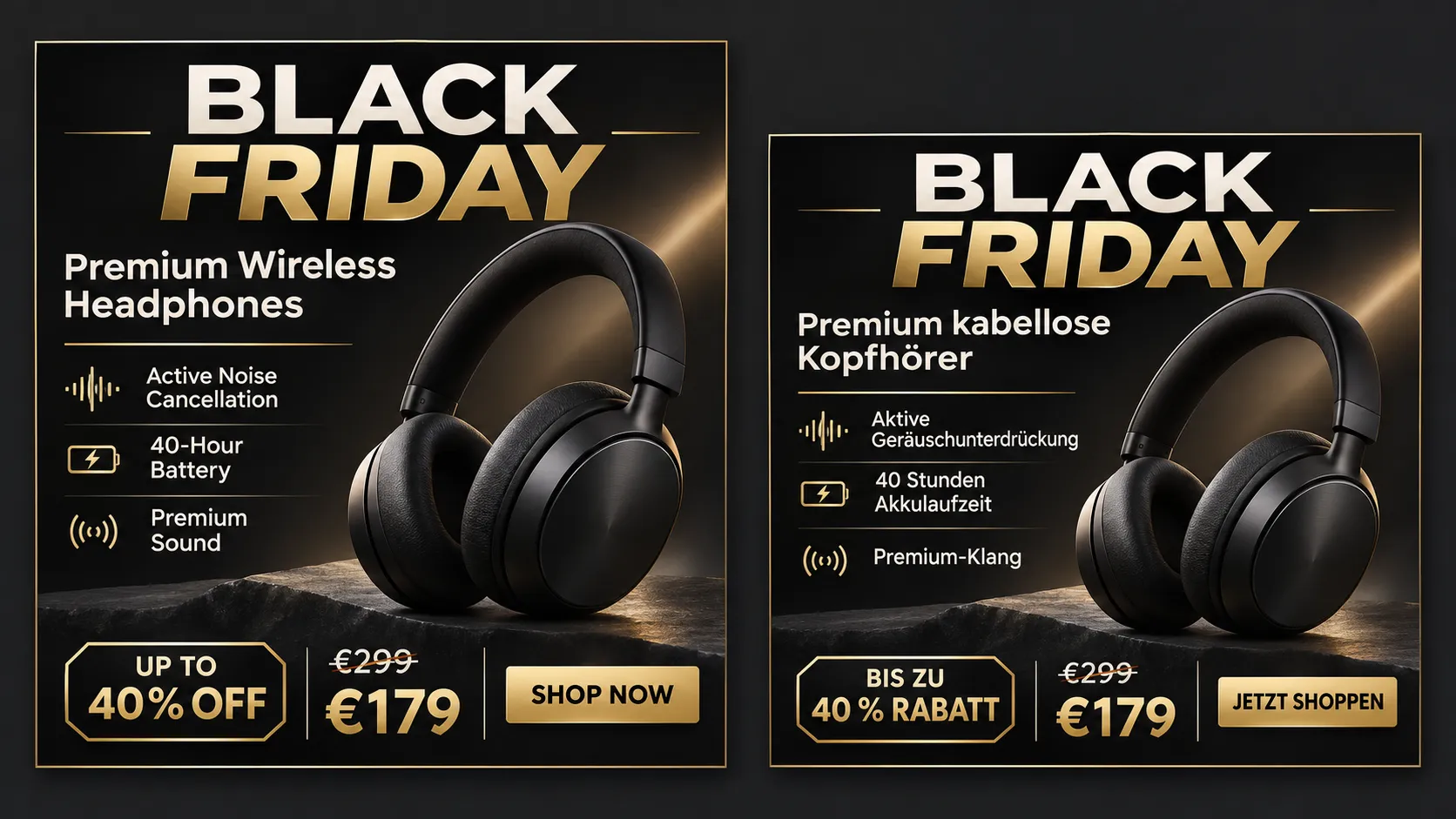
A business might prepare an English Black Friday banner, translate it into several languages, and assume the campaign is ready for international distribution.
But language is only one part of localization.
Different markets may have different product priorities, promotional calendars, customer expectations, shipping conditions, and purchasing considerations. A campaign should account for these factors before its creative assets are finalized.
Build a Market Priority List
You do not need to target every country simultaneously. Start with the markets that already generate meaningful traffic or sales, or that align with your expansion plans.
Consider the following factors:
| Factor | What to Evaluate | Why It Matters |
|---|---|---|
| Existing demand | Traffic, orders, and customer interest | Helps identify markets with established demand |
| Language coverage | Published Shopify store languages | Determines which customer-facing content needs localization |
| Product relevance | Categories and products attracting local interest | Helps prioritize campaign products |
| Fulfillment | Shipping coverage, delivery times, and costs | Prevents promoting offers that cannot be fulfilled effectively |
| Promotional readiness | Local prices, discounts, and campaign conditions | Keeps the offer accurate for each market |
For example, a brand that already receives meaningful traffic from Germany and France may prioritize those markets before expanding into additional language regions.
Use your Shopify analytics and existing customer data to inform the decision. Do not assume that a market is attractive simply because it has a large population or a different language.
Create a Market-Specific Campaign Brief
Before producing campaign content, document the essentials for each target market:
• Target country and storefront language
• Priority product categories
• Campaign objective
• Approved promotional offer
• Campaign start and end dates
• Shipping and delivery condition
• Required product and marketing content
This brief becomes the reference for your marketing, ecommerce, and design teams.
It also reduces the risk of different language versions communicating inconsistent prices, discounts, or product information.
2. Plan Your Remaining Q4 Campaigns Around Shopping Intent
Different Q4 campaigns serve different purposes. A Black Friday promotion is often centered on discounts, while a Christmas campaign may focus more on gift discovery and product recommendations.
As of November 5, 2026, merchants preparing their remaining Q4 activities should focus on the upcoming shopping windows.
| Campaign | 2026 Date | Main Customer Intent | Planning Priority |
|---|---|---|---|
| Black Friday | November 27 | Find attractive discounts | Prepare priority offers and product promotions |
| Cyber Monday | November 30 | Discover online deals | Highlight selected products and online offers |
| Christmas | December 25 | Find gifts and seasonal products | Organize gift recommendations and product collections |
| Year-End Promotions | Late December | Shop remaining seasonal offers and new-year deals | Prepare final promotions and updated product content |
Black Friday: Make Your Main Offers Easy to Understand
Black Friday is a useful opportunity to highlight products with clear promotional value.
For each target market, identify:
• Products included in the promotion
• Discount percentages and eligibility
• Campaign start and end times
• Important exclusions
• Relevant shipping conditions
Prepare the campaign around the products that actually participate in the offer. Avoid creating localized visuals that show an outdated discount or imply that every product is included.
Cyber Monday: Focus on Online Product Discovery
Cyber Monday provides another opportunity to promote selected products and online offers.
Rather than simply reusing every Black Friday asset, review which products and offers remain relevant.
Depending on your catalog, you may prioritize product comparisons, selected-category promotions, or online-exclusive deals.
Keep the message distinct from Black Friday if the actual offer or product selection changes.
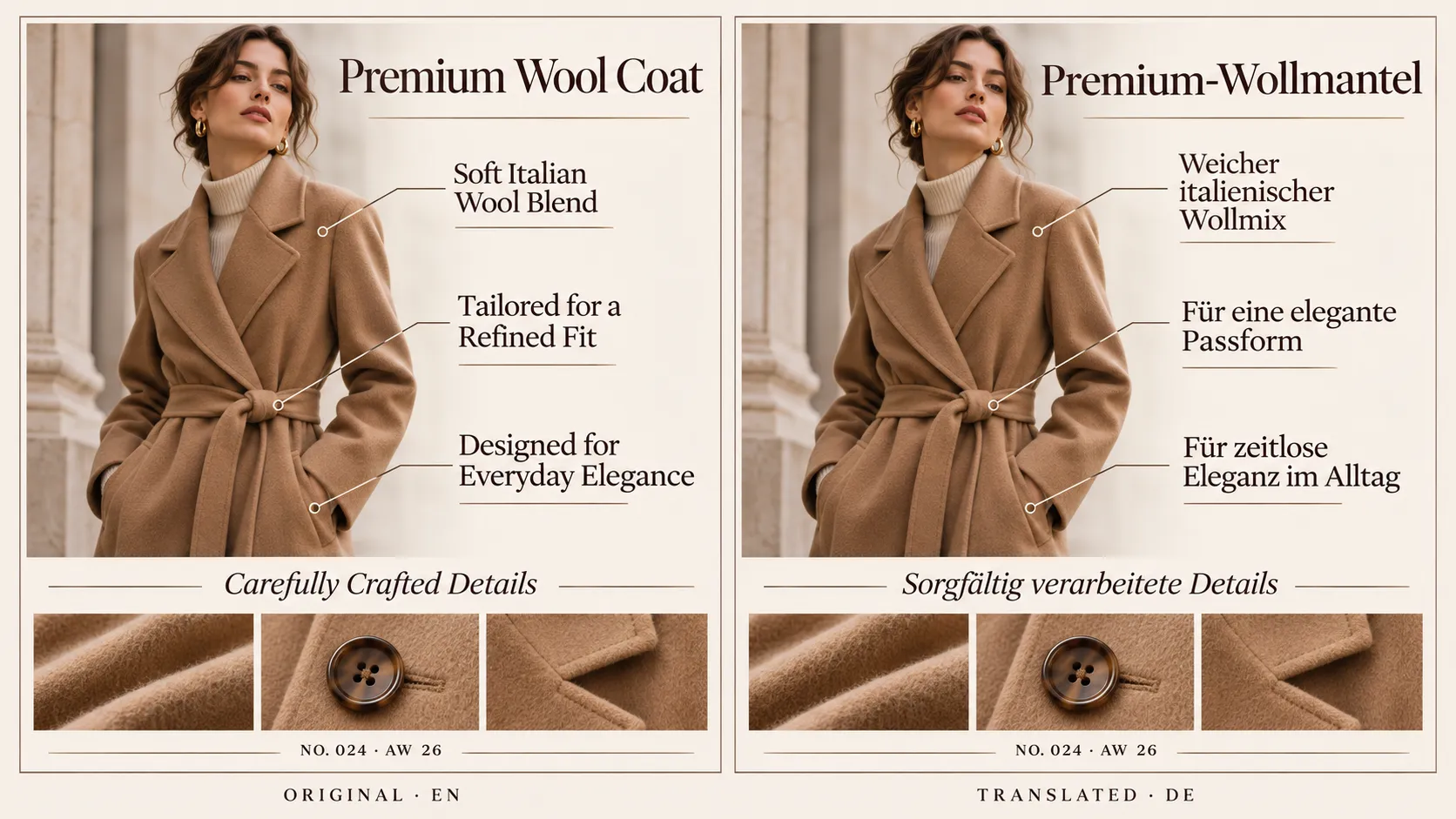
Christmas: Help Shoppers Discover Suitable Gifts
Christmas campaigns often require a different content approach.
Customers may be shopping for family members, friends, or colleagues, so useful content can include:
• Gift recommendations by category
• Product collections for different budgets
• Bestselling seasonal products
• Product feature explanations
• Gift-related product guides
The most important consideration is that recommendations, product availability, delivery information, and promotional claims remain accurate in each market.
Year-End: Keep the Campaign Updated
After Christmas, some merchants continue running seasonal promotions or introduce new collections.
Review expired campaign visuals, update offer details, and make sure customers are not seeing outdated Black Friday or Christmas messaging.
A simple campaign calendar with owners and deadlines can prevent these inconsistencies.
3. Match Your Products and Campaign Messages to Each Market
Once the target markets and campaign periods are established, the next task is deciding what to promote.
Not every product deserves equal attention in every market.
A brand selling fashion, beauty, home accessories, and electronics may find that different categories attract different levels of interest across its international customer base.
Use your existing store data rather than relying on broad assumptions about what people in a particular country prefer.
Prioritize Products Using Four Practical Criteria
Existing product demand
Look at product-page views, add-to-cart activity, orders, and revenue by market where the data is available.
Products with established demand may be stronger candidates for seasonal campaigns than items with little customer interest.
Campaign relevance
Consider whether a product fits the shopping occasion.
For example, winter clothing, giftable beauty products, home accessories, and electronics may each play different roles in a holiday campaign.
Availability and fulfillment
Before promoting a product, confirm that it is available in the target market and can be delivered within the stated timeframe.
A strong promotion is not useful if customers discover that the product is unavailable or cannot arrive before Christmas.
Information requirements
Some products need more explanation than others.
A beauty product may have ingredient and usage information. An electronic device may have feature diagrams and technical specifications. A fashion product may need clear material details and size information.
These differences affect which product content should be reviewed before the campaign launches.
Use a Product and Market Priority Matrix
| Market | Product Focus | Campaign Message | Important Content |
|---|---|---|---|
| United States | Proven bestsellers and promotional products | Black Friday deals and holiday offers | Discount details, product benefits, delivery information |
| Germany | Products with established local interest | Seasonal offers and gift recommendations | German product information, localized visuals, delivery details |
| France | Selected categories with strong local potential | Holiday promotions and curated product selections | French product content, price accuracy, shipping information |
4. Prepare Product Content for Each Target Market
Campaign content includes both marketing assets and product-level information.
Marketing Assets
These can include:
• Campaign banners
• Email visuals
• Social media graphics
• Landing page imagery
• Paid advertising creative
• Promotional banners
These assets may require different language versions, offer details, or campaign messaging depending on the channel and target market.
Product-Level Content
These materials help customers understand the products being promoted:
• Product gallery images
• Product feature graphics
• Product benefit diagrams
• Product specifications
• Size and measurement guides
• Usage instructions
This is where image localization becomes particularly relevant.
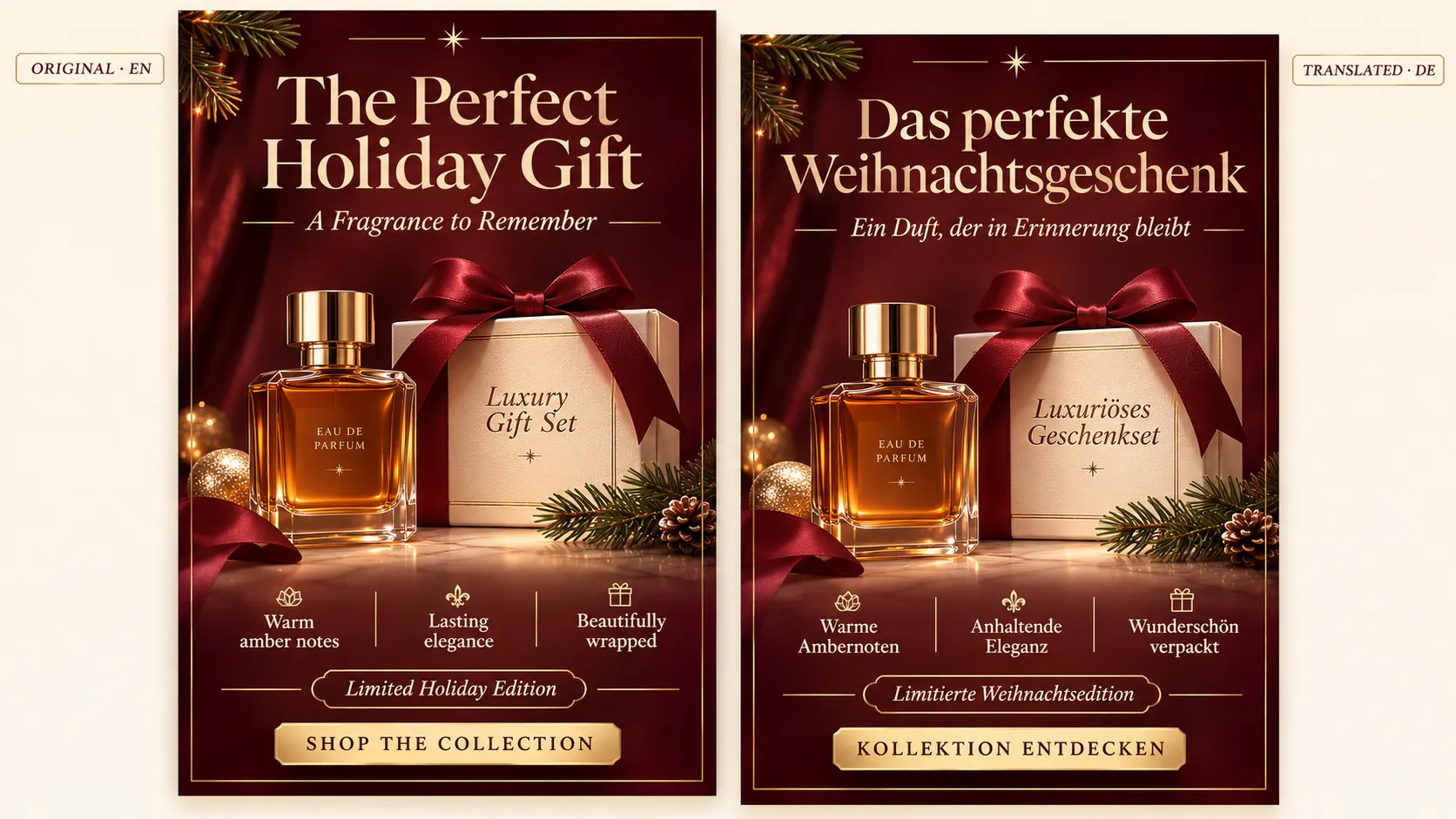
For example, an electronics brand may have a product feature image showing English labels such as "Fast Charging" and "Long Battery Life." Even if its Shopify product description is already available in German, those labels may remain in English inside the image.
Similarly, a beauty brand may use product benefit graphics that contain embedded English text.
The merchant needs to consider not only the translated page copy but also the visual information customers encounter while browsing.
Which Assets Should You Prioritize?
| Asset | Priority | Consideration | Localization Approach |
|---|---|---|---|
| Product feature images | Important | Product information appears inside the image | Prepare language-specific versions |
| Product infographics | Important | Customers need to understand labels and explanations | Translate and review the embedded text |
| Size and measurement graphics | Important | Labels must be understandable without changing measurements | Localize labels and verify values |
| Product instructions | Important | Customers need accurate usage information | Translate and carefully review |
| Promotional product images | Important | Offers or product messages appear inside the image | Check language and promotional accuracy |
| Plain product photography | Lower | No language-dependent text is present | Usually no separate language version is needed |
Not every visual requires the same treatment. Prioritize assets that contain information customers need to understand before making a purchase.
5. How Vidoly Image Translator Fits Into Your Shopify Campaign Workflow
Once you have identified the product images that need language-specific versions, you need a practical way to manage them.
Vidoly Image Translator is designed for Shopify merchants who want to translate text embedded in product images or upload their own translated versions.
It supports reviewing and publishing localized images for store languages while keeping the original product images unchanged.
This makes it relevant to the product-content part of an international campaign workflow.
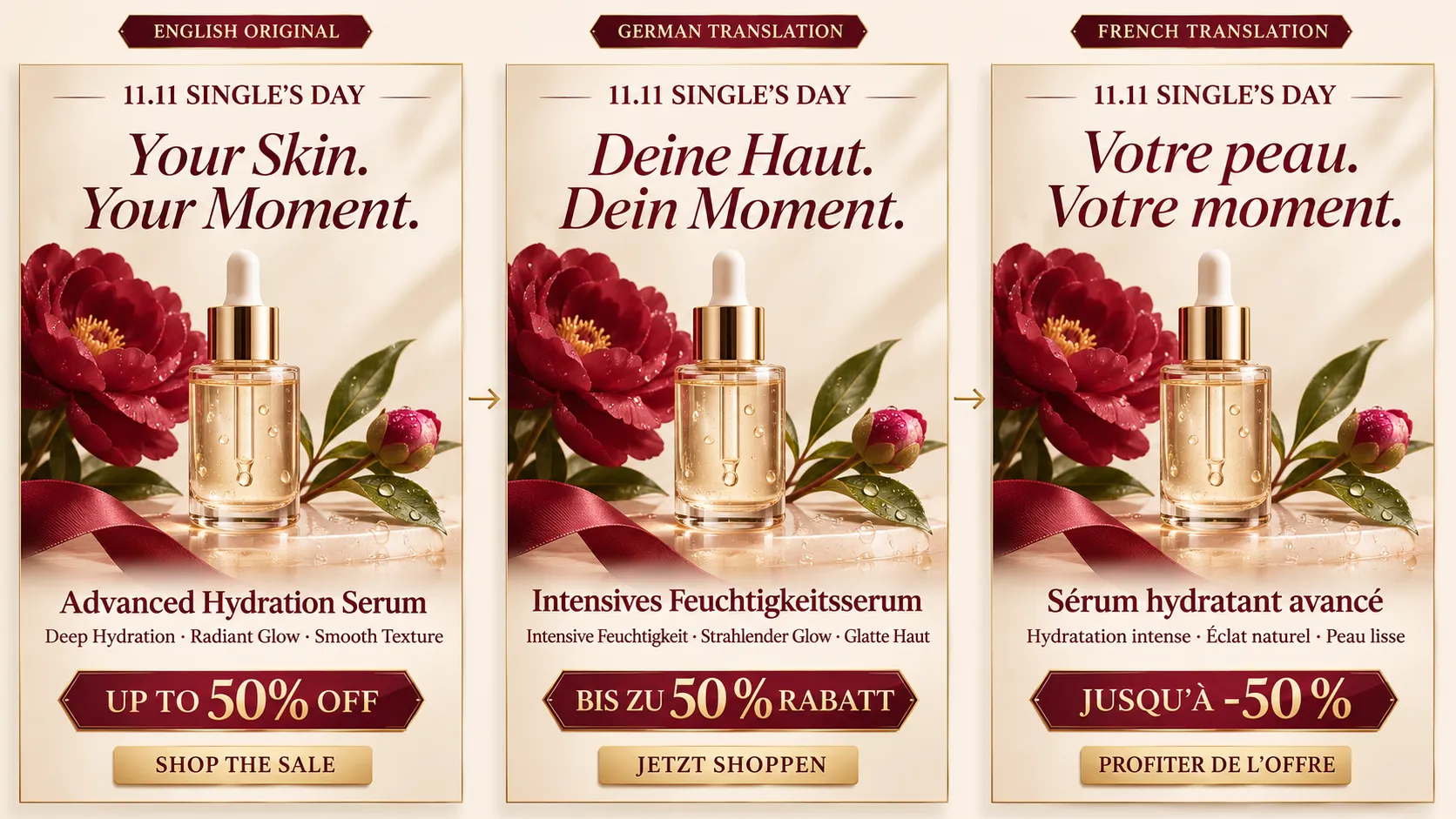
A Practical Example: One Product, Three Language Versions
Imagine a skincare brand preparing a holiday promotion for customers in the United States, Germany, and France.
Its product gallery includes an infographic explaining three product benefits:
• Hydrating Formula
• Suitable for Sensitive Skin
• Lightweight Texture
The original English image can remain the approved source. The merchant can then prepare German and French versions of the same product graphic.
The important details should remain unchanged:
• The product itself
• The product photography
• The product benefits and claims
• The visual identity
• The underlying product information
Only the language-specific image text and any necessary layout adjustments should change.
The Workflow
Step 1 - Identify the Product Images
Select the Shopify product images containing important text. Focus on priority products and high-visibility product pages rather than processing the entire catalog without a plan.
Step 2 - Select the Required Languages
Use the languages configured for your target markets. Keep a clear record of which product images require each language version.
Step 3 - Translate or Upload Your Own Images
Use Vidoly's AI image translation workflow or upload custom translated images prepared by your team.
Step 4 - Review Before Publishing
Check terminology, product claims, numbers, layout, and readability. A translated image should communicate the same approved product information as the original.
Step 5 - Publish and Test
Publish the reviewed localized images through the app's supported workflow. Then visit representative product pages in each language and confirm that the expected images appear.
For a more detailed explanation of image types, translation methods, and the Shopify image translation process, see our guide to translating product images on Shopify.
One important distinction: Vidoly Image Translator is designed for text in Shopify product images. It should not be treated as an automatic localization solution for every external advertising creative, email, social media post, or storefront element. Those assets may require their own design and localization workflows.
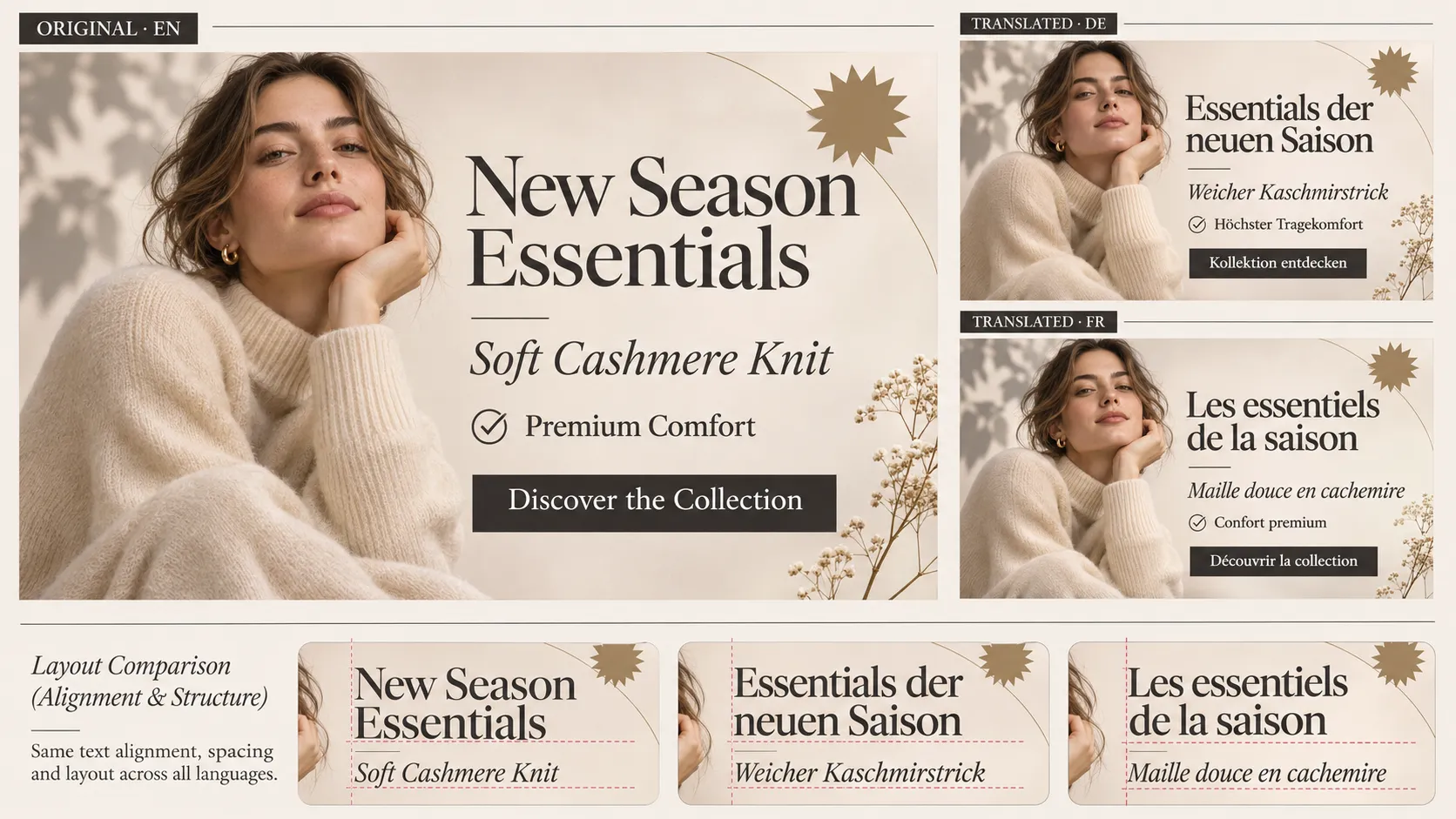
6. Don't Forget the Fashion Product Experience: Virtual Try-On
For fashion brands, localized product information is only one part of the customer experience.
A shopper may understand the product description and campaign offer but still want to know:
How might this garment look on me?
This is where virtual try-on can complement an international holiday campaign.
Vidoly Virtual Try-On for Shopify adds an AI-powered visual preview to the Shopify product page. Shoppers can select a garment, upload a photo, and generate a preview of themselves wearing the product.
It addresses a different customer question from image translation:
| Shopify Feature | Main Purpose | Customer Question |
|---|---|---|
| Vidoly Image Translator | Localize text embedded in product images | Can I understand the product information? |
| Vidoly Virtual Try-On | Generate a visual clothing preview | How might this garment look on me? |
For a fashion brand preparing a holiday campaign, the two tools can support different parts of the same shopping journey.
For example, a localized product infographic can help an international shopper understand a garment's features, while virtual try-on provides an additional visual reference for the garment's appearance.
Virtual try-on is not a size-measurement or fit guarantee. Keep size charts, fabric details, garment measurements, and product descriptions available.
If you're preparing a fashion store for the holiday season, our Shopify Q4 fashion store preparation guide explains how to prioritize seasonal SKUs, prepare product pages, test the mobile experience, and evaluate virtual try-on usage.
7. Your International Q4 Campaign Checklist
Before launching a holiday campaign in multiple markets, review the following areas.
Market Planning
• Target markets are selected based on business priorities and customer data.
• Store languages are configured for the intended audiences.
• Priority products and categories are identified for each market.
• Campaign offers and fulfillment conditions are confirmed.
Campaign Preparation
• Campaign dates and promotional details are approved.
• Product availability has been checked.
• Campaign content is prepared for the relevant channels.
• Expired promotional messages have been removed or scheduled for replacement.
Product Content
• Important product images containing text have been identified.
• Product specifications and claims match the approved source.
• Required language versions have been prepared.
• Translated images have been reviewed before publishing.
Storefront Testing
• Representative product pages have been tested in each target language.
• Correct language-specific images appear.
• Product details, prices, and promotional conditions are accurate.
• Mobile and desktop experiences have been checked.
• Fashion product pages retain clear size and fit information where virtual try-on is available.
A checklist like this helps marketing and ecommerce teams coordinate their work without treating every market as an identical copy of the original storefront.
8. Common Mistakes When Running International Holiday Campaigns
Using the Same Campaign Strategy for Every Market
A translated message does not automatically make a campaign relevant. Review product demand, offer conditions, and fulfillment requirements in each target market.
Translating Before Confirming the Offer
Do not begin producing multiple language versions before the campaign's prices, discounts, dates, and eligibility rules have been approved. Otherwise, changes can create unnecessary rework.
Localizing Every Asset Without Prioritization
Not every product image or campaign visual needs a separate language version. Start with high-visibility content and product information that customers need to understand.
Treating Translation as a Substitute for Market Research
Language localization cannot replace decisions about product selection, pricing, shipping, and campaign relevance. Those decisions need to be informed by actual market data.
Forgetting to Update Campaign Content
Black Friday, Cyber Monday, and Christmas have different promotional contexts. Remove expired offers and make sure customers do not encounter outdated campaign information.
Launching Without Testing the Customer Journey
A campaign may look correct in a design file but still display incorrectly on a live storefront. Test the actual customer experience in the target language, especially on mobile devices.
Frequently Asked Questions
What is Shopify holiday campaign localization?
Shopify holiday campaign localization is the process of adapting an ecommerce campaign for different target markets. It includes reviewing market priorities, product selection, promotional information, language-specific content, and relevant product visuals.
How should Shopify stores prepare for international Black Friday campaigns?
Start by selecting target markets, confirming the products and offers included in the promotion, and preparing the relevant campaign content. Check prices, discounts, dates, fulfillment conditions, and language-specific product information before publishing.
Do I need different holiday campaigns for every country?
Not necessarily. A brand can maintain one central campaign strategy while adjusting selected products, promotional messages, language versions, and fulfillment information for different markets. The level of localization should depend on the audience and business requirements.
Should Shopify product images be localized separately from product descriptions?
Yes, when the images contain important text. Translating a product description does not automatically translate words embedded in a JPG, PNG, or other image file. Text-heavy product graphics may require a separate image localization workflow.
Can Vidoly Image Translator translate Shopify product images?
Vidoly Image Translator supports AI translation of text embedded in Shopify product images and uploading custom translated images. Merchants can review and publish localized images for their store languages while keeping original product images unchanged.
How can fashion stores improve their international product pages?
Fashion stores should provide clear product photography, accurate size charts, fabric information, and localized product content. They can also consider virtual try-on to give shoppers an additional visual preview of selected garments.
Prepare Your Shopify Store for Every Market This Holiday Season
A successful international holiday campaign starts with understanding who you are selling to, what products matter in each market, and what information customers need before purchasing.
You do not need to rebuild your entire campaign for every country. Start with your most important markets, prioritize the products and offers that matter, and create a consistent process for reviewing localized content.
For Shopify product images containing embedded text, Vidoly Image Translator helps merchants create AI-translated or custom-uploaded image versions, review them, and publish localized visuals while keeping original images unchanged.
And for fashion brands that want to give shoppers another way to visualize selected products, Vidoly Virtual Try-On for Shopify can complement that product-page experience.
One brand strategy. Multiple markets. A clearer shopping experience for every customer.
Translate product images and add virtual try-on for a consistent global shopping experience.
Prepare market-specific visuals with Vidoly Image Translator and give fashion shoppers an AI-powered preview.
Explore Vidoly Image TranslatorRelated Articles
How to Translate Product Images on Shopify for Different Languages
Shopify Virtual Try-On: How to Let Customers Try Clothes Before Buying
Which Shopify Products Should Use AI Virtual Try-On? A Practical Guide to Choosing the Right Items